.png?width=345&height=139&name=PORT%20LOGO%20TEAL%20w%20LIFESAVER%20(2).png "PORT Lighting")
Share this
by PORT on Dec 1, 2025, 10:37:31 AM
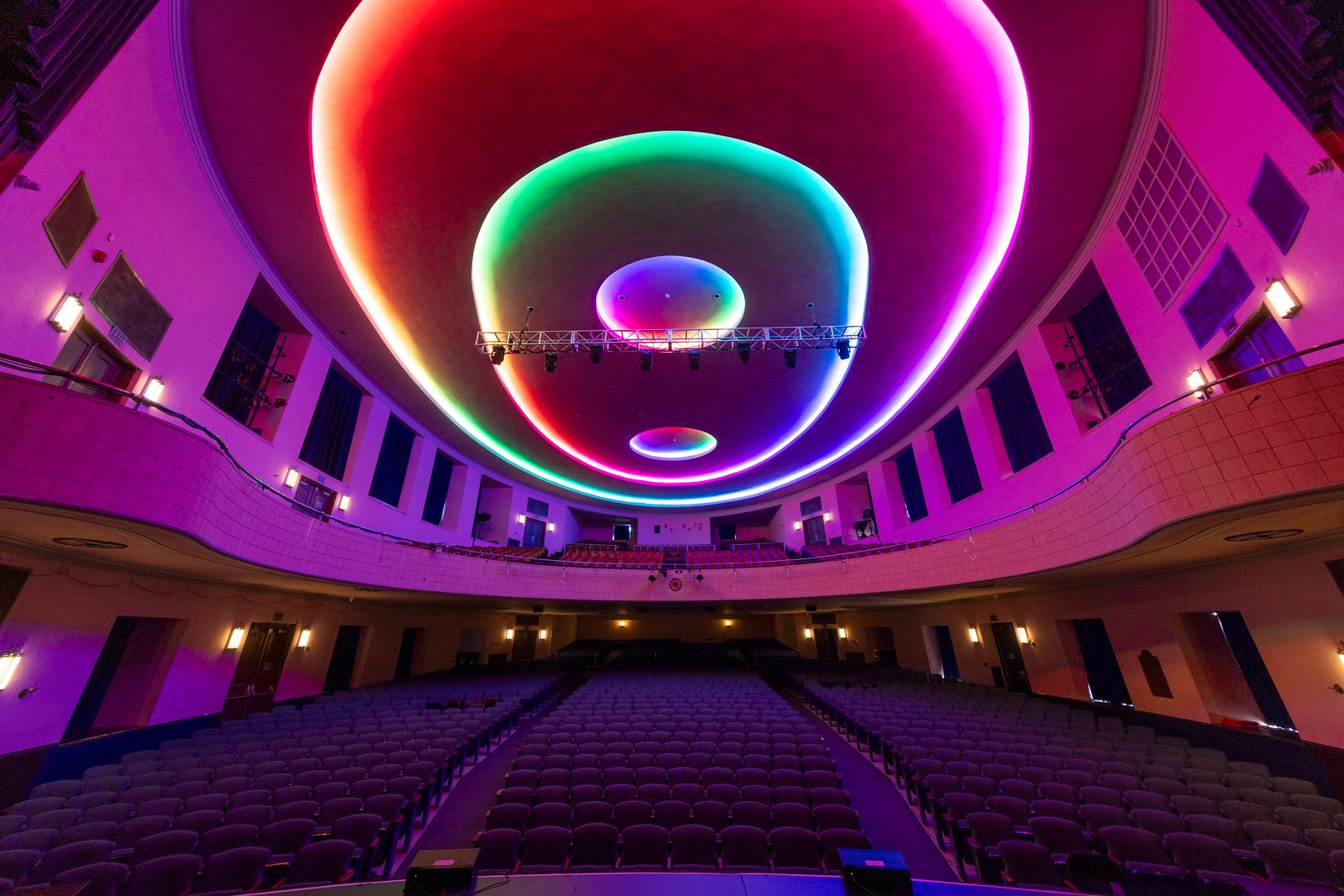
At PORT, when we say we transform spaces, we mean it. We are very proud to show our latest theatrical installation at the Chevalier Theatre in Medford, MA, in collaboration with Seaport Energy (IBEW 103).
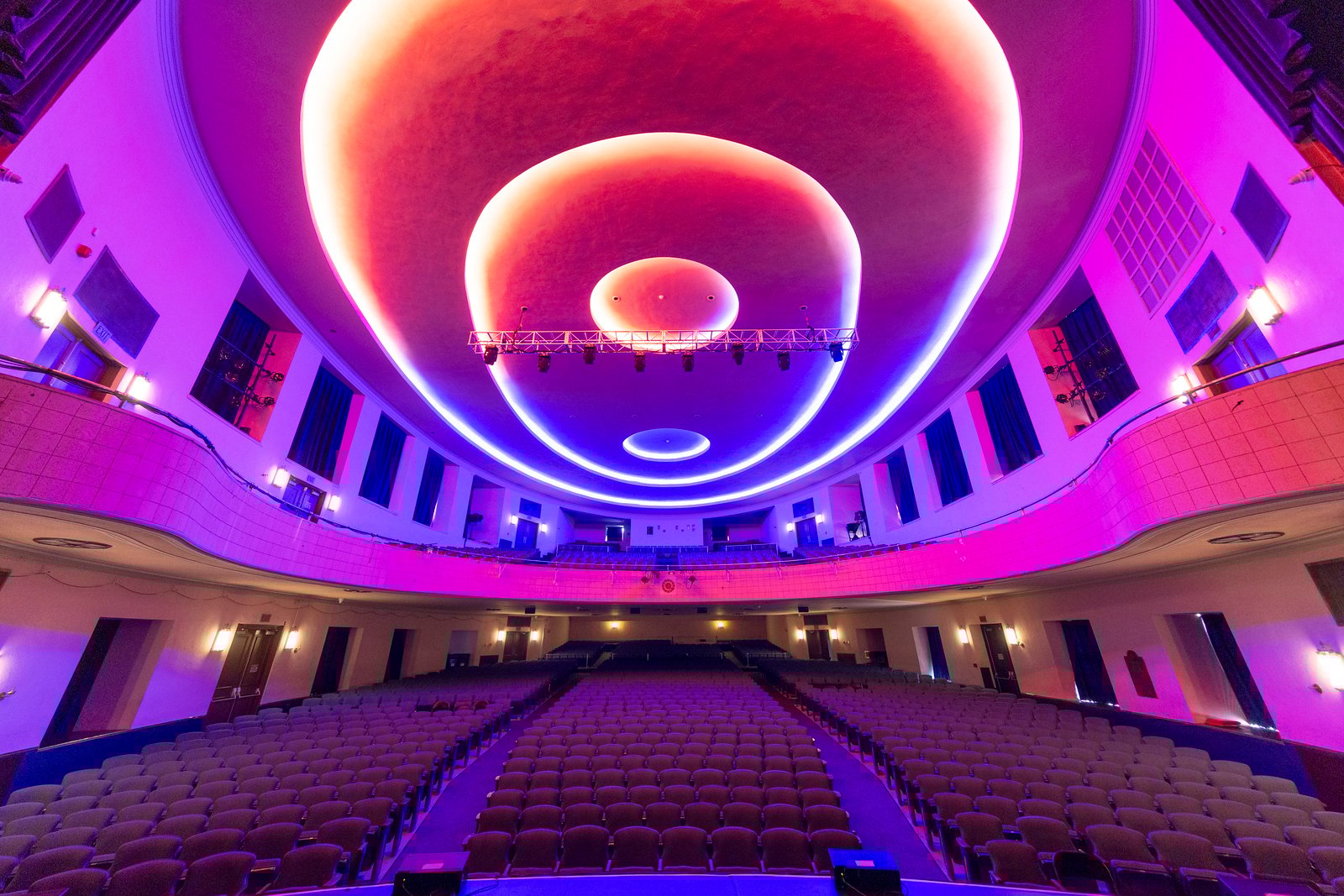
The goal was to preserve the historical nature of the theater, while adding modern color-changing light that would serve as a permanent installation. For this project, we did a full upgrade of the existing incandescent house lighting system to a modern LED and pixel-controlled RGBW solution.
Scope of Work 🔍
In order to transform Chevalier Theatre's lighting system from an incandescent system to a smart LED system, a lot of renovation had to go into the project, with many complicated parts involved. To start, hundreds of 25-watt incandescent lamps across four concentric cove structures were replaced with approximately 850 ft of Environmental Lights Dual Bend Cove Wash RGBW pixel tape. This change resulted in a large decrease in energy usage.
If the 1,698 lamps at the top of the theatre were at full output, they would take up 42,450 watts of electricity, while full output of the top LED tape only amounts to 6,120 watts! For the under balcony lights, 124 150-watt lights were replaced by 16.5-watt LED lights, bringing energy usage down from 18,600 to 2,046 watts! Existing lumiline incandescent sconces were also replaced by custom LED retrofit lights. In order to add in the LED controls, the ETC sensor rack also needed to be updated.
This consisted of putting in a new CEM3 processor, new fans and seals, and a combination of R20 relays and LED10 dimmers to support LED loads. To easily work the lights, a Pharos control system with Advatek long-range pixel transmitter/receiver distribution was installed.
Technical Design & Implementation 📝
- Used ADVATEK long-range pixel transmission to distribute data efficiently while minimizing channel count:
- Condensed pixel control from ~12,000 channels down to ~2,048 (approx. 16" resolution)
- Designed a distributed network infrastructure:
- Installed patch bays above the AV closet and at a central attic location
- Each of the 16 distributed DIN-rail enclosures houses power supplies and pixel receivers
- Patch bays allow flexible routing and easy future integration for new fixtures or gateways
- Repurposed existing cove dimming circuits as switched loads to extend the life of new power supplies
- Installed dual bend tape to follow tight curves and maintain consistent beam angles
- Used mounting clips instead of channel to achieve the necessary bend radius while keeping fixtures secure
- Custom tape lengths and connectorized tails streamlined installation and reduced on-site time
- A significant amount of prep time went into this project to coordinate ahead of time how long the tails needed to be. This streamlined the process and allowed for easy plug-in of the tape lighting.
Challenges 🛠️
Aging Infrastructure
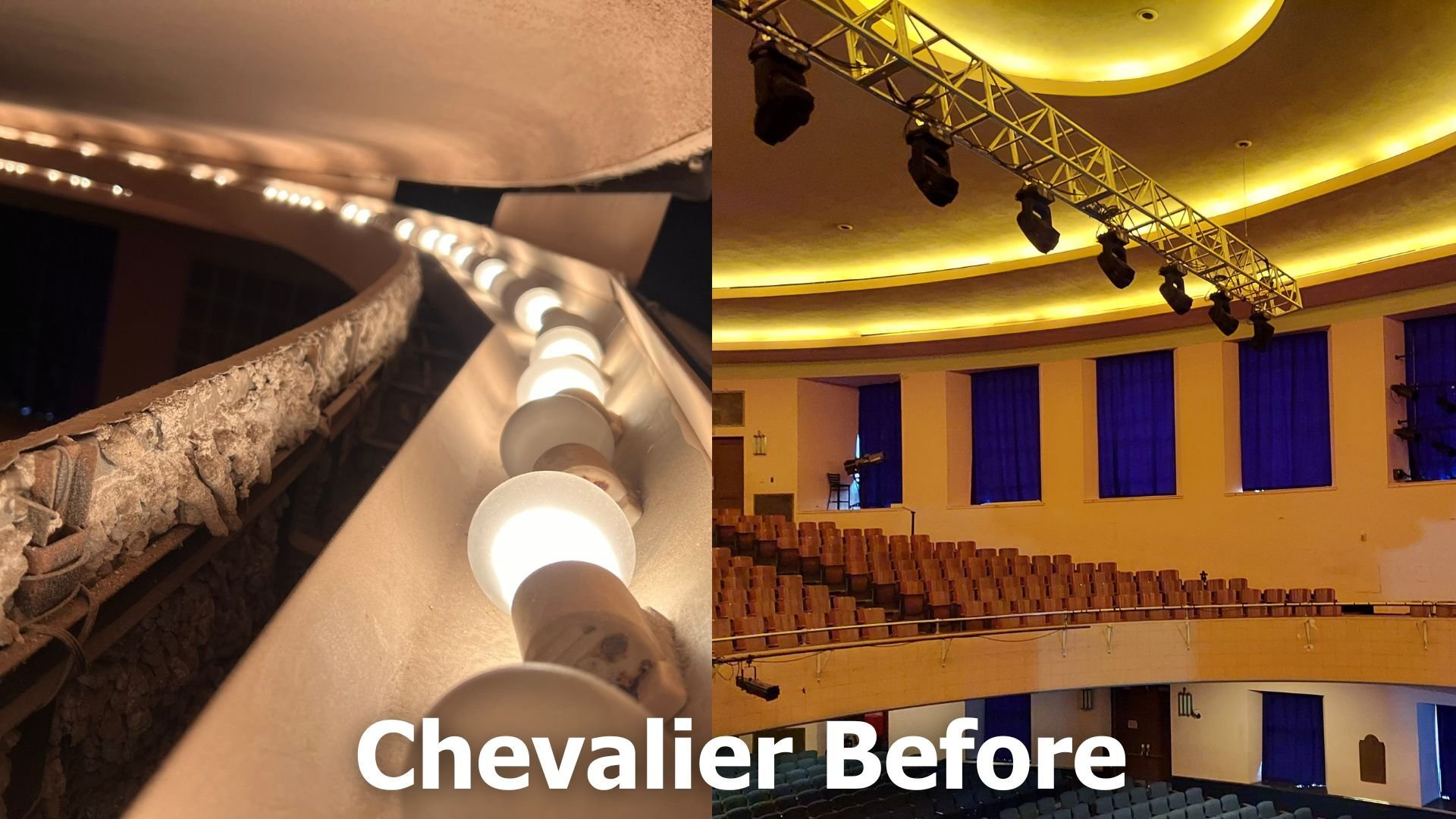
The existing system and building infrastructure were extremely outdated, with incandescent lamps, failing porcelain sockets, cloth wiring, and a “dimmer, wire, light” configuration with no data distribution. Decades of patchwork repairs had left some circuits and fixtures unstable or shorting out, making a simple LED fixture retrofit impractical and necessitating a complete overhaul and replacement of the system. The new LED approach provided a significant reduction in wattage while also requiring the addition of modern data distribution, including Ethernet patching at each location. To simplify the installation, the team used Advatek drivers and a specialized long-range driver system to reduce the amount of low-voltage wiring and minimize the number of driver enclosures and locations.
Difficult Work Environment
The work environment presented significant physical and safety challenges, particularly within the coves, which were lined with rough-cut metal lath, sharp edges, and irregular access hatches. Access was provided primarily by a makeshift catwalk consisting of narrow wooden planks with no permanent railing system, requiring the installation team to use lifelines and other safety measures while working. In many areas, technicians had to lie down on the planks, lower metal access panels, and reach into spaces with only a few inches of clearance to complete the installation. The difficult conditions required careful navigation and precise work in extremely confined spaces, while existing sconces also had to be handled gently and adapted using custom tube lamps.
Coordination & Logistics
Coordination and logistics were a major part of the project, as the team had to carefully sequence the work with Seaport Energy while keeping the venue operational. Existing circuits and power feeds that were still in good condition were intercepted and reused, with dimmed power feeds converted to relays and extended to the new driver locations. Because the venue continued to host live performances throughout the project, installation had to be planned around scheduled events and restricted access periods. The team was given only limited windows to take the lighting system completely offline, requiring close coordination to complete each phase of work and ensure the system was fully operational again in time for upcoming performances.
Design Constraints
Design constraints centered on integrating modern LED technology while preserving the venue’s historic appearance and architectural character. Fixture positioning within the four cove rings had to be carefully planned to achieve the desired ceiling wash, consistent blending, and dynamic lighting effects while ensuring the LED sources remained hidden from view. The selected flexible LED product also needed to meet strict output, wattage, and installation requirements while being capable of bending on two axes to follow the curved geometry of the coves.
Preserving the historic sconces presented an additional challenge because they relied on discontinued GE LumaLine lamps and contained components that were extremely difficult to replace. Rather than modifying the original fixtures, the team located a specialty manufacturer capable of producing custom, dimmable LED LumaLine replacements in the various sizes required. This allowed the sconces to be upgraded while leaving their historic infrastructure intact. The finished system also balanced preservation with modern functionality by incorporating an architectural control system for everyday operation and pre-programmed scenes, along with a pass-through that allows a theatrical lighting console to override the system and incorporate the house and dome lighting into live performances.

Results & Benefits💡
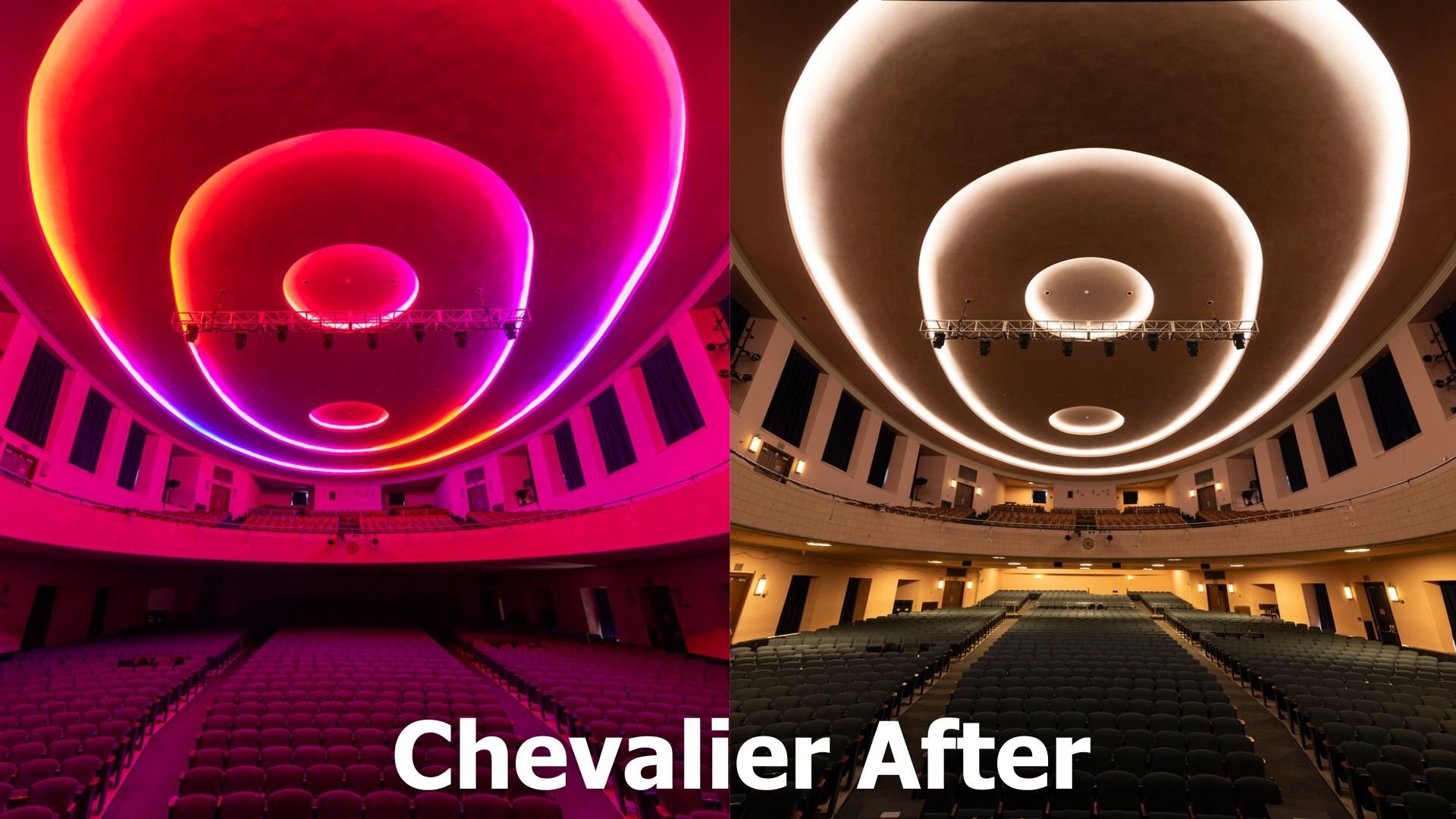
The architectural lighting installation done at Chevalier Theatre was a stunning success. Thanks to the smart LED lighting control system, the theatre is now equipped with dynamic lighting capabilities for shows, rentals, and special events, that is able to mix and change colors seamlessly with smooth dimming across the coves.
The robust new network infrastructure future-proofs the venue for new AV or lighting control technologies. With this exciting new addition, safety and reliability are also put at the forefront compared to the old incandescent system. The energy savings were drastic for this theatre, bringing down full-use electricity from 61,050 Watts to 8,166 Watts.
Transform With PORT
At PORT, we love transforming spaces, bringing the best technology while keeping the historical heritage of the buildings we work with. Don't hesitate to reach out today to see how we can elevate your space while bringing down your bills.
Make sure you check out Chevalier Theatre's new look at one of a number of shows coming up!
Other services we provide:
No Comments Yet
Let us know what you think